What may be happening
Low self-esteem, self-doubt, or harsh self-criticism often shows up through thoughts, emotions, habits, or relationship patterns before it feels easy to explain clearly.
Mental Health Support
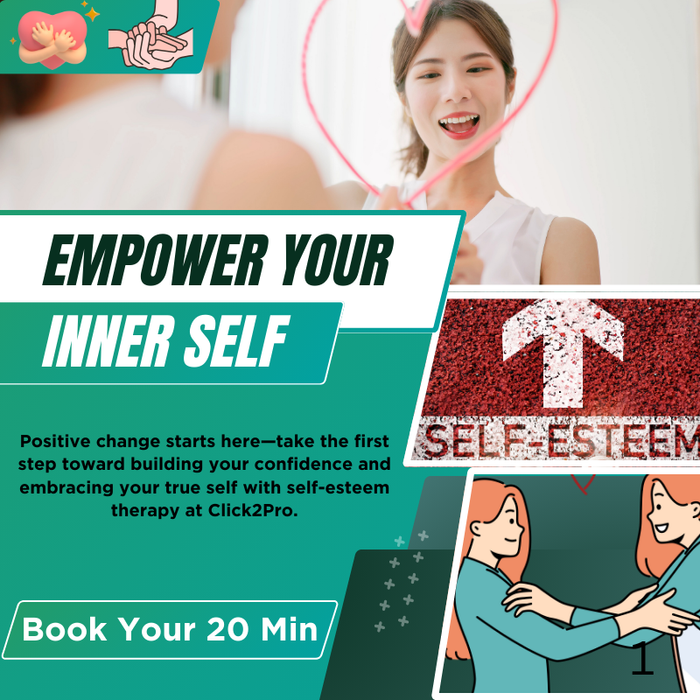
Boost your confidence with expert self esteem therapy at Click2Pro. Get 20 mins free consultation today. Rebuild your self-worth and self-love.
Get 20 Minutes Free Session
Continue with Click2Pro on WhatsApp for a calm, issue-focused next step.

Understanding The Concern
low self-esteem, self-doubt, or harsh self-criticism often affects the relationship a person has with themselves. It may show up through self-criticism, doubt, perfectionism, comparison, hesitation, or the need for repeated reassurance.
If parts of this already feel familiar, the sections below can help you recognise how the pattern may be showing up in daily life and where support may help.
What often comes with this kind of strain
Low self-esteem, self-doubt, or harsh self-criticism often shows up through thoughts, emotions, habits, or relationship patterns before it feels easy to explain clearly.
Many people keep adapting around low self-esteem, self-doubt, or harsh self-criticism, which can make the strain feel normal even when it is already affecting daily balance.
The effect of low self-esteem, self-doubt, or harsh self-criticism can reach mood, routine, confidence, communication, or the ability to feel settled through the day.
Counselling can make low self-esteem, self-doubt, or harsh self-criticism feel more understandable, less isolating, and easier to respond to with steadier next steps.
Daily-Life Understanding
These signs can make it easier to recognise how the issue may be affecting thoughts, feelings, behaviour, or relationships in everyday life.
With low self-esteem, self-doubt, or harsh self-criticism, people often carry a running commentary of doubt, criticism, or ‘not enough’ thinking.
Avoiding exposure, keeping standards unrealistically high, or delaying decisions can feel safer than risking failure.
The person may rely heavily on external approval to feel okay, even briefly.
Even progress may be minimised when self-worth is already unstable.
Common Patterns
These are some of the cycles, habits, and internal responses that can make the issue feel heavier over time.
Where the pattern often shows up
low self-esteem, self-doubt, or harsh self-criticism often stays active when the person measures themselves harshly against others or against impossible standards.
Over time, self-judgment can start sounding factual rather than emotional.
Procrastination, withdrawal, or perfectionism may be attempts to avoid shame or disappointment.
Positive feedback or progress may not feel stable enough to change the deeper pattern.
Impact Areas
Strain like this rarely stays in one place. It often reaches emotions, routines, confidence, relationships, or the way the body settles after stress.
Impact 01
Self-doubt can make small choices feel unusually loaded.
Impact 02
Boundaries, closeness, communication, and confidence with others may all shift.
Impact 03
The person may hide, over-perform, or struggle to tolerate mistakes.
Impact 04
Setbacks can hit harder when self-worth is already under pressure.
When Support Is Usually Needed
These are common points where people decide that coping alone is no longer enough and a steadier kind of support may help.
Who This Support Is For
If your experience sounds similar to the points below, it may be a sign that this kind of support could be relevant for you.
Self-Check Indicators
These markers are meant to support clarity, not self-diagnosis. They can help you notice whether the issue is influencing everyday functioning in a meaningful way.
Indicator 01
With low self-esteem, self-doubt, or harsh self-criticism, self-judgment can start sounding factual rather than like a temporary emotional state.
Indicator 02
Supportive feedback may help briefly, but it does not fully settle the deeper doubt underneath.
Indicator 03
Setbacks or imperfections hit harder because they connect quickly with self-worth rather than just the situation.
Indicator 04
Opportunities, visibility, or honest expression may shrink because the risk of judgment already feels too high.
How Counselling Can Help
Support can help you make sense of what is happening, respond more steadily, and work on the patterns that are keeping the issue active.
Support helps clarify what is really feeding low self-esteem, self-doubt, or harsh self-criticism rather than only reacting to the latest episode or trigger.
Counselling can link low self-esteem, self-doubt, or harsh self-criticism with the parts of life it is affecting most, including relationships, confidence, routine, or emotional steadiness.
Therapy can support steadier coping, better regulation, and clearer next steps around low self-esteem, self-doubt, or harsh self-criticism.
The goal is not only relief, but a clearer way of understanding, managing, and responding to low self-esteem, self-doubt, or harsh self-criticism over time.
What Sessions May Focus On
These are the kinds of practical areas people often work on once support begins.
Sessions often begin by clarifying how low self-esteem, self-doubt, or harsh self-criticism is currently showing up rather than assuming one fixed story about it.
Support may focus on triggers, beliefs, stress responses, and behaviour patterns connected with low self-esteem, self-doubt, or harsh self-criticism.
Therapy can then shift toward emotional regulation, clearer coping, better boundaries, and a steadier way of handling low self-esteem, self-doubt, or harsh self-criticism.
Sessions can track what is changing, what is still difficult, and which kinds of support are most useful going forward.
Online Counselling
Online support can make it easier to begin privately, keep momentum, and stay consistent without adding more strain to daily life.
Step 01
You do not need to explain everything perfectly at once. Begin from the part that currently feels heaviest or most disruptive.
Step 02
Online support can help connect the concern with the habits, emotions, and situations that keep it active.
Step 03
Click2Pro keeps the path simple through online sessions, psychologist profile review, and WhatsApp-based guidance when you want it.
What the next step can look like
Myths vs Reality
These clarifications can help if doubt, self-minimising, or mixed advice has made it harder to decide whether support is worth considering.
Myth
It only matters if it becomes extreme.
Reality
Even when low self-esteem, self-doubt, or harsh self-criticism seems manageable on the surface, persistent strain can still affect functioning, confidence, and emotional balance.
Myth
If you understand it, it should be easy to fix alone.
Reality
Insight is important, but change often becomes easier when the deeper pattern is worked through in a more structured way.
Myth
Support is only useful when the situation becomes unmanageable.
Reality
Many people benefit before the issue reaches crisis level, especially when they want clarity, steadier coping, and a healthier next step.
Psychologists at Click2Pro
If you want to see who you may be speaking with, you can review a few psychologist profiles here before taking the next step.

Expertise

Expertise

Expertise
Speak With Click2Pro
If this is starting to affect day-to-day life, you can explore Self Esteem Therapy through Click2Pro on WhatsApp, review psychologist profiles, or use Contact Us if you would like a calmer next step.
Full Detailed Guide
If you want the earlier long-form information on Self Esteem Therapy, you can continue with the preserved guide below.
Self-esteem is the cornerstone of a healthy and fulfilling life. It affects your relationships, work performance, and even how you view your accomplishments. At Click2Pro, our self-esteem therapy focuses on helping individuals reclaim their confidence, overcome self-doubt, and embrace self-love. Whether you are struggling with negative self-talk or facing challenges in asserting yourself, our therapy sessions are designed to rebuild your inner strength and create lasting positive change.
In today’s fast-paced and competitive world, many people experience self-esteem issues due to societal pressures or unresolved past experiences. Our expert therapists provide a safe, judgment-free environment where you can explore your feelings, challenge negative beliefs, and work towards a healthier self-image. With techniques like Cognitive Behavioral Therapy (CBT), self-worth counseling, and self-love therapy, we offer a holistic approach to improving your self-esteem.
If you’re searching for “online therapy near me” or looking for tailored therapy solutions, Click2Pro is here to help you take the first step toward a more confident and empowered life.
Recognizing the signs of low self-esteem is the first step in overcoming it. While many people associate low self-esteem with insecurity, it can manifest in a variety of ways that often go unnoticed. Here are some of the common challenges individuals face:
Constant Negative Self-Talk
A persistent inner critic can make you dwell on past mistakes and believe you’re not good enough. Over time, this can lead to a cycle of self-sabotaging thoughts that are difficult to escape.
Avoiding Social Situations
Low self-esteem can make social interactions feel overwhelming. Many individuals avoid gatherings or relationships out of fear of judgment, which further isolates them and lowers their confidence.
Difficulty Setting Boundaries
People with low self-esteem often struggle to assert themselves, leading to imbalanced relationships where their needs are overlooked or ignored.
At Click2Pro, our self-esteem therapy is specifically designed to address these symptoms, offering practical solutions and emotional support. Whether through self-love therapy or structured sessions focusing on specific issues, we aim to help you rebuild your confidence and self-worth.
Additionally, if you’re searching for an online psychologist in India, our team provides accessible and effective therapy tailored to meet your individual needs.
Self-esteem issues are more common than many realize, affecting people across all demographics and regions. Studies show that approximately 85% of the global population struggles with low self-esteem at some point in their lives. In India, the pressures of academics, social expectations, and career competition often contribute to feelings of inadequacy and low self-worth, especially among teenagers and young adults.
For women, societal norms about appearance and success amplify these challenges, while men may face struggles with emotional expression and societal expectations. Teens, particularly, are vulnerable due to peer pressure and academic stress, making self-esteem therapy a crucial resource for long-term mental well-being. Whether you're a student, working professional, or parent, the effects of low self-esteem ripple through various aspects of life.
At Click2Pro, our counseling for self-esteem is designed to address these challenges with a personalized approach. With evidence-based techniques, we help individuals across all age groups build lasting confidence and self-worth.
While professional self-esteem therapy is invaluable, there are steps you can take on your own to start improving your self-worth. These self-help strategies complement therapy, offering practical tools to shift your mindset:
Practice Gratitude
Reflect on the positive aspects of your life daily. Gratitude can help you reframe negative thoughts and focus on what you’re doing well.
Engage in Self-Care Activities
Whether it’s exercise, pursuing a hobby, or relaxation techniques, self-care is an act of kindness toward yourself. It reinforces your value and importance.
Challenge Negative Beliefs
Replace thoughts like “I can’t do this” with “I’ll try my best.” This small change can lead to big shifts in how you perceive challenges.
At Click2Pro, we offer self-love therapy sessions to guide you through a deeper exploration of these strategies. Our experts help you implement these tools effectively to build long-term self-esteem.
While self-help strategies can provide a great starting point, addressing deeply rooted self-esteem challenges often requires professional guidance. Self-esteem issues frequently stem from long-term negative thought patterns, unresolved past trauma, or societal pressures that can be difficult to overcome alone.
Professional self-esteem therapy offers a structured approach to uncovering the root causes of these struggles. At Click2Pro, we combine therapeutic techniques like Cognitive Behavioral Therapy (CBT) and self-worth counseling to help individuals rebuild their confidence systematically. Therapy provides a safe space to explore and address the emotional barriers that hinder self-esteem.
Moreover, having a skilled therapist ensures accountability and support throughout your journey. Seeking help is not a sign of weakness but a step toward reclaiming your potential and living a more fulfilling life.
Self-esteem challenges affect everyone differently, depending on their age, gender, and life experiences. At Click2Pro, we recognize these unique needs and customize our self-esteem therapy to suit diverse demographics:
Teens: Navigating academic pressures, peer relationships, and body image concerns often leads to self-esteem struggles. Our sessions focus on empowering teens with tools to combat self-doubt and social anxiety.
Women: Societal expectations around appearance, success, and caregiving roles can undermine self-esteem. Through self-love therapy, we help women embrace their worth and build resilience.
Men: Many men struggle with expressing vulnerability due to cultural norms. Our therapy creates a judgment-free environment to help men address emotional challenges and enhance self-worth.
Professionals: Workplace stress and the fear of failure often affect self-esteem. Our sessions address these issues, helping individuals find confidence and balance.
This tailored approach ensures that therapy resonates deeply with each client, providing the support they need to reclaim their confidence and self-worth.
At Click2Pro, we believe in a personalized and compassionate approach to self-esteem therapy. Each individual has a unique story, and our therapy sessions are designed to address the root causes of low self-esteem while fostering sustainable confidence. We incorporate a combination of evidence-based techniques to create a tailored plan for each client.
Cognitive Behavioral Therapy (CBT): This approach helps you identify and challenge negative thought patterns, replacing them with healthier beliefs about yourself.
Self-Love Therapy: We focus on nurturing kindness and compassion toward yourself, encouraging a positive relationship with your inner self.
Self-Worth Counseling: By addressing past traumas or ingrained beliefs, we help you rebuild a strong sense of personal value.
Our goal is to empower you to embrace your strengths and live a more fulfilling life. Whether you're dealing with social anxiety, past trauma, or feelings of inadequacy, our expert therapists are here to guide you every step of the way.
Many individuals have transformed their lives through self-esteem therapy at Click2Pro. Here are just a few of the success stories that highlight the power of seeking professional help:
Ananya, 25: "Before therapy, I constantly felt like I wasn’t good enough. Through Click2Pro’s self-worth counseling, I learned to challenge those negative thoughts and focus on my achievements. Now, I feel more confident in both my personal and professional life."
Rajesh, 40: "I struggled with low self-esteem for years due to workplace stress. The combination of self-love therapy and mindfulness practices at Click2Pro has helped me regain control and believe in myself again."
These stories are a testament to the transformative potential of therapy. At Click2Pro, we’re dedicated to helping you create your own success story, one step at a time.
How does self-esteem therapy work?
Self-esteem therapy helps you identify and address negative beliefs that affect your self-worth. At Click2Pro, our experts use methods like Cognitive Behavioral Therapy (CBT) and self-worth counseling to replace harmful thought patterns with empowering ones.
How long does self-esteem therapy take?
The duration of self-esteem therapy varies depending on individual needs. Some people see improvements in just a few sessions, while others may benefit from longer-term support to address deeper issues.
Is self-love therapy suitable for teenagers?
Absolutely. Teens often struggle with self-esteem due to academic pressures and social challenges. Self-love therapy can help them build confidence and manage these stressors effectively.
Can I combine self-esteem therapy with other types of therapy?
Yes! Many clients find combining self-esteem therapy with anxiety or relationship counseling enhances their overall mental health and confidence.
Low self-esteem can hold you back from achieving your full potential, but you don’t have to face this journey alone. At Click2Pro, our self-esteem therapy empowers individuals to rebuild their confidence and embrace their self-worth. Using proven methods like self-love therapy and self-worth counseling, we help you overcome challenges and create lasting positive change.
Take the first step today by scheduling a consultation with one of our experienced therapists. Don’t let low self-esteem define your life—let Click2Pro guide you toward a more confident, fulfilling future.
Click2Pro Homepage
If you are exploring Self Esteem Therapy and also want a wider view of online therapy, counselling, and psychologist support in India, start from the homepage.
Related discovery
These options stay close to what you may be dealing with, so it is easier to keep going without losing the thread.
Related Services
Support areas that stay close to this concern if you want to compare what may fit best.
Related Cities
Major cities where this kind of support is available if location matters to your next step.
Related Blogs
Guides and articles that stay close to the current theme.
Related Psychologists
Psychologists you may want to compare if you are looking for someone who feels like a good fit.
FAQ
These answers cover some of the questions people often have when they are trying to understand the issue and decide whether support may help.

Prioritizing mental health is crucial for a balanced and fulfilling life. At Click2Pro, we understand that mental well-being affects every aspect of your life. By investing in mental health, you enhance your happiness and resilience, better equipping yourself to face life's challenges. Our top psychologists and therapists provide personalized, confidential care tailored to your unique needs. Embrace better mental health with Click2Pro and experience the transformative power of compassionate, expert support. You deserve to thrive.





Talk to Therapist