Signs of Bipolar Disorder: Identifying Symptoms in Females, Men, and Teens
Signs of Bipolar Disorder: Identifying Symptoms in Females, Men, and Teens
Bipolar disorder is a complex and often misunderstood mental health condition characterized by extreme mood swings. These can range from manic highs to depressive lows. Recognizing the signs of bipolar disorder in different demographics is crucial for timely intervention and effective management. Understanding how bipolar disorder manifests in females, men, and teens can help tailor treatment and support strategies to improve quality of life. At Click2Pro, we are dedicated to offering comprehensive mental health support to those dealing with bipolar disorder.
What is Bipolar Disorder?
Definition and General Information
Bipolar disorder, previously known as manic-depressive illness, is a mental health condition that affects mood, energy levels, and the ability to function. Individuals with bipolar disorder experience periods of intense emotions, shifts in mood, and fluctuations in activity levels that can last days, weeks, or even months.
Different Types of Bipolar Disorder
- Bipolar I Disorder: Characterized by manic episodes lasting at least seven days or severe mania requiring immediate hospital care. Depressive episodes typically occur as well, lasting at least two weeks.
- Bipolar II Disorder: Defined by a pattern of depressive episodes and hypomanic episodes, which are less severe than manic episodes.
- Cyclothymic Disorder: A milder form of bipolar disorder, involving periods of hypomanic symptoms and depressive symptoms lasting for at least two years.
Prevalence and Impact on Daily Life
Bipolar disorder affects approximately 1-3% of the global population. It significantly impacts daily life, affecting relationships, work, and overall well-being. Early diagnosis and treatment are crucial for managing symptoms and improving life quality.
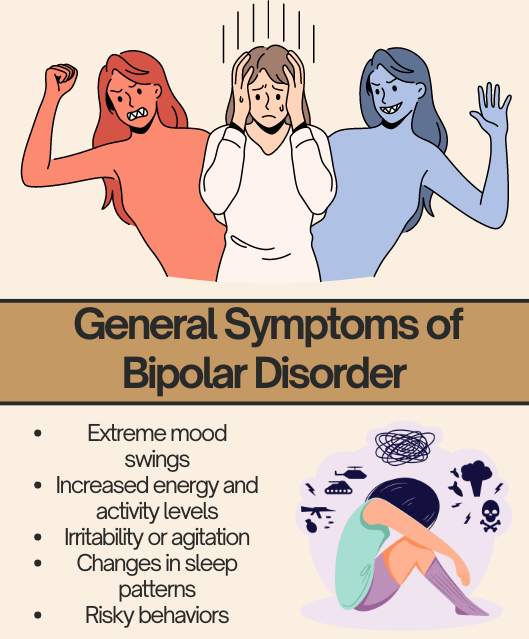
General Symptoms of Bipolar Disorder
Explanation of Manic and Depressive Episodes
Bipolar disorder is marked by distinct manic and depressive episodes. Understanding these episodes is key to recognizing the disorder.
Manic Episodes
Manic episodes are periods of abnormally elevated mood, energy, and activity. Common symptoms include:
- Increased energy and activity levels
- Euphoric or excessively happy mood
- Irritability and agitation
- Decreased need for sleep
- Grandiose ideas or inflated self-esteem
- Rapid speech and racing thoughts
- Risky behaviors (e.g., excessive spending, risky sexual activity)
Depressive Episodes
Depressive episodes involve a prolonged period of low mood and energy. Common symptoms include:
- Persistent sadness or hopelessness
- Fatigue and low energy
- Changes in sleep patterns (insomnia or oversleeping)
- Loss of interest in activities once enjoyed
- Difficulty concentrating
- Feelings of worthlessness or guilt
- Thoughts of death or suicide
Signs of Bipolar Disorder in Females
Unique Symptoms and Challenges in Women
Bipolar disorder can manifest differently in women due to hormonal influences and social factors.
Hormonal Influences
Hormonal changes during menstrual cycles, pregnancy, and menopause can impact bipolar symptoms. Women may experience:
- Mood swings related to the menstrual cycle
- Postpartum depression or mania
- Increased symptoms during menopause
Case Studies or Real-Life Examples
Consider the case of a woman whose manic episodes align with her menstrual cycle. Understanding this pattern can help tailor treatment to mitigate these hormonal effects.
Importance of Seeking Timely Help and Treatments
Early intervention is crucial. Women are more likely to seek help during depressive episodes, but recognizing manic symptoms is equally important.t.
Signs of Bipolar Disorder in Men
Typical Symptoms in Men
Men with bipolar disorder often exhibit different symptoms compared to women, influenced by societal expectations and stigma.
Impact of Societal Expectations and Stigma
Men may be less likely to seek help due to societal pressures to appear strong. This can lead to:
- Higher rates of substance abuse
- Aggressive or reckless behavior during manic episodes
- Longer delays in receiving a diagnosis
Case Studies or Real-Life Examples
A man experiencing irritability and aggressive behavior during manic episodes may benefit from recognizing these signs as part of bipolar disorder.
The Importance of Recognizing Symptoms Early
Early recognition and intervention can prevent severe consequences, such as legal or financial issues.
Signs of Bipolar Disorder in Teens
Unique Symptoms in Adolescents
Bipolar disorder in teens can be challenging to diagnose due to overlapping symptoms with typical teenage behavior.
Impact of Puberty and Developmental Changes
Puberty and developmental changes can exacerbate symptoms, including:
- Extreme mood swings
- Increased irritability or aggression
- Risky behaviors
Differences Between Typical Teenage Behavior and Bipolar Symptoms
Distinguishing bipolar symptoms from normal teenage behavior is crucial. Look for:
- Severe changes in mood lasting several days
- Decline in academic performance
- Withdrawal from friends and activities
Case Studies or Real-Life Examples
A teen showing extreme irritability and rapid mood changes might be experiencing early signs of bipolar disorder.
How Parents and Guardians Can Seek Help for Their Teens
Parents should seek professional help if they notice severe or prolonged mood changes in their teen. Early intervention can significantly improve outcomes.
Bipolar Depression
Understanding Bipolar Depression vs. Unipolar Depression
Bipolar depression differs from unipolar depression in that it includes episodes of mania or hypomania. Recognizing this difference is crucial for accurate diagnosis and treatment.
Symptoms Specific to Bipolar Depression
Symptoms of bipolar depression can include:
- Severe fatigue and low energy
- Overwhelming sadness or hopelessness
- Difficulty concentrating
- Loss of interest in activities
Treatment Options and Coping Strategies
Treatment options for bipolar depression include:
- Medications (mood stabilizers, antipsychotics, antidepressants)
- Psychotherapy (CBT, DBT)
- Lifestyle changes (regular exercise, healthy diet)
- Support groups
Bipolar Disorder Treatments
Overview of Treatment Options
Effective treatment of bipolar disorder often involves a combination of medication, therapy, and lifestyle adjustments.
Therapy
Therapeutic approaches include:
- Cognitive-behavioral therapy (CBT)
- Dialectical behavior therapy (DBT)
- Family-focused therapy
Lifestyle Changes
Incorporating lifestyle changes such as regular exercise, a healthy diet, and a consistent sleep schedule can help manage symptoms.
Success Stories from Click2Pro Clients
Sharing success stories can provide hope and encouragement to others. For example, a client who successfully manages their bipolar disorder with the help of Click2Pro’s comprehensive treatment plan.
Living with Bipolar Disorder
Strategies for Managing Symptoms
Living with bipolar disorder requires ongoing management. Strategies include:
- Regular monitoring of mood and symptoms
- Adhering to treatment plans
- Developing coping strategies for stress
Importance of Support Systems
Having a strong support system is crucial. This can include family, friends, and support groups. Click2Pro offers resources to help individuals build and maintain these support systems.
Conclusion
Bipolar disorder is a multifaceted mental health condition that affects individuals differently based on gender and age. Understanding the unique symptoms in females, men, and teens is crucial for early diagnosis and effective treatment. Early intervention, tailored treatment plans, and robust support systems are key to managing this condition effectively.
At Click2Pro, we are committed to providing comprehensive mental health support to those dealing with bipolar disorder. Our team of experts is equipped to offer personalized treatment plans that address the unique needs of each individual. Whether you are a woman experiencing hormonal influences on your mood, a man facing societal stigma, or a teenager navigating developmental changes, Click2Pro is here to help.
Living with bipolar disorder can be challenging, but with the right support and treatment, individuals can lead fulfilling lives. If you or someone you know is experiencing symptoms of bipolar disorder, seeking professional help is the first step towards better management and improved quality of life.
FAQs
- What causes bipolar disorder?
Bipolar disorder is believed to be caused by a combination of genetic, biochemical, and environmental factors. Family history, brain structure and function, and stressful life events can all contribute to the development of the condition.
- What happens in bipolar disorder?
Bipolar disorder involves extreme mood swings, including manic (high energy, euphoria) and depressive (low energy, sadness) episodes. These mood shifts can significantly impact daily functioning and quality of life.
- How to cure bipolar disorder?
While there is no cure for bipolar disorder, it can be managed effectively with a combination of medication, therapy, and lifestyle changes. Ongoing treatment and support are crucial for maintaining stability.
- What are the 7 types of bipolar disorder?
The primary types include Bipolar I, Bipolar II, Cyclothymic Disorder, Bipolar Disorder Not Otherwise Specified (NOS), Rapid Cycling, Mixed Episodes, and Substance/Medication-Induced Bipolar Disorder.
- Why does bipolar disorder happen?
Bipolar disorder occurs due to a mix of genetic predisposition, neurochemical imbalances, and environmental stressors. These factors together can trigger the onset of the disorder.
- How to know if I have bipolar disorder?
Symptoms include extreme mood swings, changes in energy and activity levels, and alterations in sleep patterns. A professional diagnosis involves a thorough assessment by a mental health expert.
- How to diagnose bipolar disorder?
Diagnosis involves clinical evaluation by a psychiatrist or psychologist, who will assess symptoms, medical history, and sometimes use mood questionnaires or psychological tests.
- How to treat bipolar disorder without medication?
Non-medication treatments include psychotherapy (such as CBT or DBT), lifestyle changes (regular exercise, healthy diet), and stress management techniques. However, many individuals benefit from combining these with medication.
- What happens in the brain with bipolar disorder?
Bipolar disorder involves abnormalities in brain function, particularly in areas that regulate mood, such as the prefrontal cortex and amygdala. Neurotransmitter imbalances also play a role.
- How long does bipolar disorder last?
Bipolar disorder is a lifelong condition. While symptoms can be managed with treatment, individuals typically experience episodes throughout their lives.
- How much time does it take to cure bipolar disorder?
There is no cure for bipolar disorder, but with effective treatment, individuals can achieve long-term stability and lead fulfilling lives. Treatment is ongoing and lifelong.
- Which hormone causes bipolar disorder?
Bipolar disorder is not caused by a single hormone but involves imbalances in neurotransmitters such as serotonin, dopamine, and norepinephrine, which affect mood regulation.
- How to control bipolar disorder?
Managing bipolar disorder involves a combination of medication, therapy, lifestyle adjustments, and support. Consistent treatment adherence, regular check-ups, and stress management are essential for control.
Transform Your Life with Expert Guidance from Click2Pro
At Click2Pro, we provide expert guidance to empower your long-term personal growth and resilience. Our certified psychologists and therapists address anxiety, depression, and relationship issues with personalized care. Trust Click2Pro for compassionate support and proven strategies to build a fulfilling and balanced life. Embrace better mental health and well-being with India's top psychologists. Start your journey to a healthier, happier you with Click2Pro's trusted online counselling and therapy services.

United States





© Copyright 2024 Click2Pro LLP. All Rights Reserved. Site By Click2Pro
Talk to Therapist