
When seeking help for anxiety and depression, finding the right therapist is a critical step towards recovery. Asking the right questions can make a significant difference in the effectiveness of your treatment. In this blog, we will explore the top 5 questions to ask your therapist about anxiety and depression treatment. These questions will help you understand your therapist’s approach, set expectations, and ensure you receive the best care possible. Additionally, we'll highlight how Click2Pro can be your go-to and trusted partner in mental health services.
Why Asking the Right Questions Matters
Navigating the journey of anxiety and depression treatment can be overwhelming. By asking the right questions, you empower yourself to take an active role in your therapy. This approach not only helps tailor the treatment to your specific needs but also builds a strong, trusting relationship with your therapist. Whether you're searching for an "anxiety specialist near me" or a "therapist near me for anxiety," being informed will set you on the path to effective healing.
Top 5 Questions to Ask Your Therapist
1. What is Your Approach to Treating Anxiety and Depression?
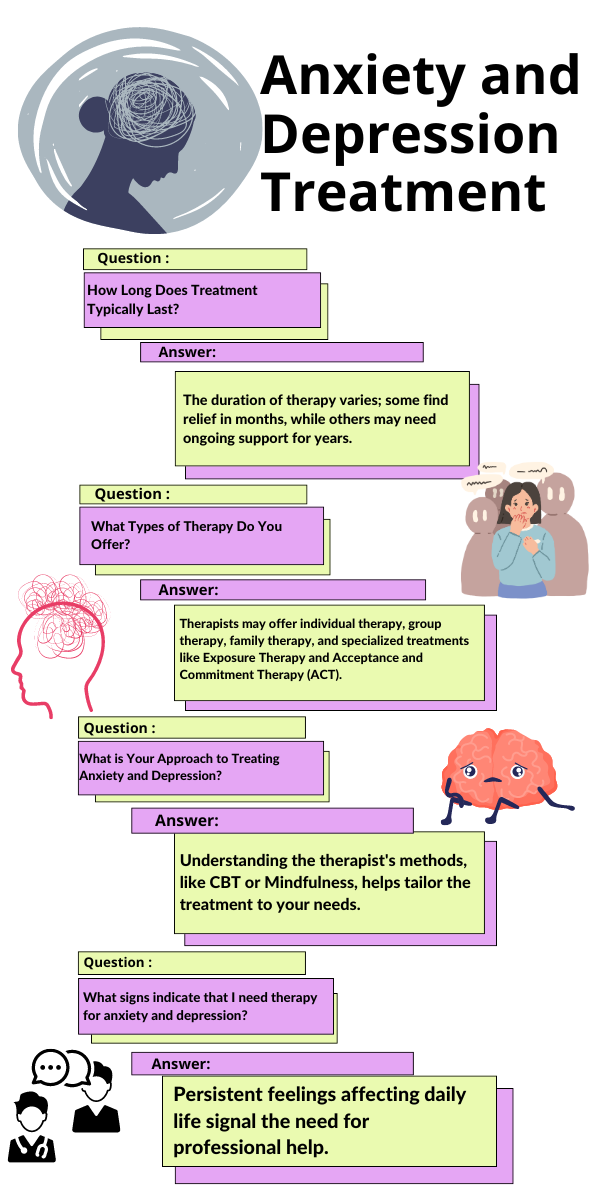
Understanding your therapist's approach is fundamental. Therapists may use a variety of methods to treat anxiety and depression, including Cognitive Behavioral Therapy (CBT), Dialectical Behavior Therapy (DBT), and Mindfulness-Based Stress Reduction (MBSR). Asking about their approach will help you gauge if it aligns with your preferences and needs.
For instance, Cognitive Behavioral Therapy is widely recognized for its effectiveness in treating anxiety and depression. If your therapist specializes in CBT, they will likely focus on changing negative thought patterns and behaviors. On the other hand, if they use Mindfulness-Based approaches, your sessions might involve practices like meditation and mindfulness exercises to help you stay grounded in the present moment.
Click2Pro therapists are well-versed in a variety of treatment modalities, ensuring that you receive a personalized approach to your mental health care.
2. What Types of Therapy Do You Offer?
It's important to know the types of therapies available to you. Different therapies can cater to different aspects of anxiety and depression. For example, some therapists might offer individual therapy, group therapy, or family therapy. Others might incorporate holistic approaches, such as art therapy or yoga.
Asking this question can also reveal if the therapist offers specialized treatments that might be beneficial for your condition. If you're searching for an "anxiety specialist near me," it's helpful to know if they provide specific treatments like Exposure Therapy for anxiety or Acceptance and Commitment Therapy (ACT).
At Click2Pro, we offer a wide range of therapeutic services, including individual therapy, group sessions, and specialized treatments, ensuring that we can meet your unique needs.
3. How Long Does Treatment Typically Last?
Understanding the duration of treatment is crucial for setting realistic expectations. Therapy is a journey, and the length of time it takes can vary significantly from person to person. Some people may find relief in a few months, while others might need several years of ongoing support.
When discussing this with your therapist, it's helpful to ask about their typical treatment plans for anxiety and depression. Do they follow a structured program, or is the duration flexible based on your progress? This question also opens the door to discussing your personal goals and how they can be achieved through therapy.
Click2Pro therapists are dedicated to providing ongoing support and will work with you to develop a treatment plan that aligns with your goals and time frame.
4. What Should I Expect During a Session?
Knowing what to expect during a therapy session can alleviate some of the anxiety associated with starting treatment. Ask your therapist to describe a typical session. Do they use structured activities, or is the session more open-ended? Understanding the format can help you feel more comfortable and prepared.
For example, if your therapist uses CBT, a typical session might involve discussing your week, identifying negative thought patterns, and developing strategies to challenge those thoughts. If they use a more integrative approach, the session might include various techniques like mindfulness exercises, talk therapy, and relaxation techniques.
Click2Pro therapists ensure that you feel comfortable and informed about the therapeutic process, providing a safe and supportive environment for your healing journey.
5. How Will We Measure My Progress?
Tracking progress is an essential part of therapy. It helps you and your therapist understand what’s working and where adjustments might be needed. Ask your therapist how they measure progress and what metrics or milestones they use. This could involve regular check-ins, self-assessment tools, or feedback from you about how you're feeling.
Understanding how progress is measured can also give you a sense of control and motivation. It allows you to see tangible improvements and stay engaged in your treatment.
At Click2Pro, our therapists use a variety of tools and techniques to monitor your progress, ensuring that your treatment is effective and adapted to your evolving needs.
How Click2Pro Can Help
Click2Pro is your trusted partner in mental health care. Our team of experienced therapists is dedicated to providing personalized and effective treatment for anxiety and depression. We understand the importance of finding the right therapist and are committed to helping you on your journey to better mental health.
- Expertise and Experience: Our therapists have extensive experience in treating anxiety and depression using evidence-based methods.
- Comprehensive Services: We offer a wide range of therapeutic services, including individual therapy, group sessions, and specialized treatments.
- Personalized Care: We tailor our approach to meet your unique needs, ensuring that you receive the best possible care.
- Convenient Access: With both in-person and online therapy options, we make it easy for you to access the support you need.
Take the first step towards better mental health by contacting Click2Pro today. Our team is here to support you every step of the way.
Conclusion
Asking the right questions is crucial for finding the right therapist and ensuring effective treatment for anxiety and depression. By understanding your therapist’s approach, the types of therapy they offer, the expected duration of treatment, what to expect during sessions, and how progress is measured, you can take an active role in your healing journey.
Click2Pro is dedicated to providing personalized and effective mental health care. Whether you're searching for an "anxiety specialist near me" or a "therapist near me for anxiety and depression," our team is here to support you. Contact Click2Pro today and take the first step towards a healthier, happier life.
FAQs
-
What qualifications should I look for in a therapist for anxiety and depression?
Answer. Look for therapists with specialized training and experience in treating anxiety and depression, such as those at Click2Pro. Ensure they have relevant certifications and a good track record in mental health care.
-
How do I know if my therapist is the right fit for me?
Answer. Evaluate your comfort level with the therapist during the initial sessions and assess their responsiveness to your concerns. It’s important to feel understood and supported.
-
What should I do if I don't feel comfortable with my current therapist?
Answer. It's important to communicate your feelings with your therapist. If the issue persists, consider seeking a different therapist, such as those available at Click2Pro. Your comfort and trust are paramount for effective therapy.
-
Can I receive therapy online?
Answer. Yes, many therapists, including those at Click2Pro, offer online therapy sessions, providing flexibility and convenience. Online therapy can be just as effective as in-person sessions.
-
What are the signs that I need to seek help from a therapist for anxiety and depression?
Answer. If you experience persistent feelings of anxiety or depression that interfere with daily life, it’s time to seek professional help from an anxiety specialist near you. Signs include difficulty concentrating, changes in sleep or appetite, and a lack of interest in activities you once enjoyed.
By asking these essential questions and choosing a trusted partner like Click2Pro, you can ensure that your journey towards mental wellness is supported by the best care possible. Take charge of your mental health today and find the right therapist to help you navigate the challenges of anxiety and depression.