Attention Deficit Hyperactivity Disorder (ADHD) affects millions of individuals worldwide, impacting their daily lives, relationships, and overall well-being. Seeking professional help from an ADHD therapist is crucial for managing symptoms effectively and improving quality of life. In this comprehensive guide, we delve into ADHD therapy and counselling, offering valuable insights and practical advice. As a trusted partner, Click2Pro is dedicated to providing top-notch ADHD therapy services tailored to your needs.
Understanding ADHD
ADHD, or Attention Deficit Hyperactivity Disorder, is a neurodevelopmental disorder characterized by persistent patterns of inattention, hyperactivity, and impulsivity. It affects both children and adults, often leading to challenges in academic, professional, and social settings. Understanding the core aspects of ADHD is the first step toward effective management.
Symptoms and Types of ADHD
ADHD manifests in three primary types:
- Inattentive Type: Difficulty sustaining attention, following instructions, and completing tasks.
- Hyperactive-Impulsive Type: Excessive fidgeting, restlessness, interrupting others, and impulsive actions.
- Combined Type: Features of both inattentive and hyperactive-impulsive types.
Causes and Risk Factors
While the exact cause of ADHD is unknown, several factors contribute to its development:
- Genetics: Family history of ADHD increases risk.
- Brain Structure and Function: Differences in brain activity and structure.
- Environmental Factors: Prenatal exposure to toxins, premature birth, and low birth weight.
The Role of an ADHD Therapist
An ADHD therapist specializes in diagnosing and treating ADHD through various therapeutic approaches. They work closely with individuals to develop personalized treatment plans that address specific symptoms and challenges. Key roles include:
- Assessment and Diagnosis: Conducting thorough evaluations to confirm ADHD.
- Therapy and Counselling: Implementing evidence-based therapies to manage symptoms.
- Support and Guidance: Offering ongoing support and resources for patients and families.
Types of ADHD Therapy
Behavioral Therapy
Behavioral therapy focuses on modifying negative behaviors and reinforcing positive ones. Techniques include:
- Behavior Modification: Establishing clear expectations and consistent consequences.
- Reward Systems: Using incentives to encourage desired behaviors.
- Parent Training: Educating parents on effective behavior management strategies.
Cognitive-Behavioral Therapy (CBT)
CBT helps individuals with ADHD develop coping strategies and problem-solving skills. It addresses negative thought patterns and promotes positive behavioral changes. Techniques include:
- Cognitive Restructuring: Challenging and changing unhelpful thoughts.
- Skill Building: Developing organizational and time-management skills.
Occupational Therapy for ADHD
Occupational therapy aims to improve daily functioning and independence. It includes:
- Sensory Integration: Addressing sensory processing issues.
- Adaptive Techniques: Teaching practical skills for daily tasks.
ADHD Therapy and Counselling Techniques
Parent Training and Education Programs
Parents play a crucial role in managing ADHD. Training programs help them understand ADHD and implement effective strategies at home. Benefits include:
- Improved Parent-Child Relationships: Reducing conflicts and improving communication.
- Consistent Behavior Management: Creating a structured environment.
Social Skills Training
Social skills training helps individuals with ADHD improve their interactions with others. Key components include:
- Role-Playing: Practicing social scenarios.
- Feedback and Reinforcement: Providing constructive feedback and positive reinforcement.
Medication Management and Therapy
Combining medication with therapy can be highly effective in managing ADHD symptoms. Medications such as stimulants and non-stimulants help regulate brain activity, while therapy addresses behavioral and emotional aspects.
Benefits of ADHD Therapy
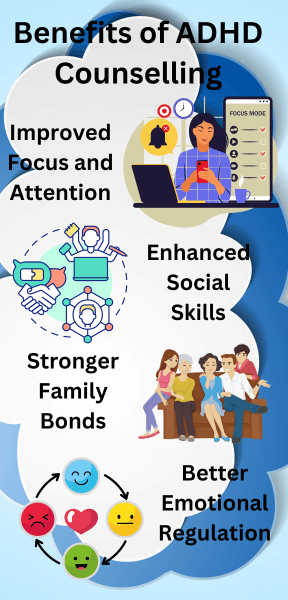
Improved Focus and Attention
ADHD therapy helps individuals develop techniques to enhance focus and attention. Benefits include:
- Better Academic Performance: Improved ability to complete assignments and follow instructions.
- Enhanced Work Efficiency: Increased productivity and reduced errors.
Better Emotional Regulation
Therapy provides tools for managing emotions, leading to:
- Reduced Impulsivity: Better control over actions and reactions.
- Improved Mood Stability: Decreased mood swings and irritability.
Enhanced Social Skills
By improving social interactions, therapy helps individuals build stronger relationships. Benefits include:
- Increased Peer Acceptance: Better understanding and responding to social cues.
- Stronger Family Bonds: Improved communication and cooperation within the family.
Increased Academic and Professional Performance
Effective therapy translates to better performance in school and work settings:
- Higher Grades and Achievements: Improved focus and organizational skills.
- Career Advancement: Better job performance and professional growth.
Improved Relationships with Family and Peers
Therapy fosters better understanding and cooperation, leading to:
- Harmonious Home Environment: Reduced conflicts and increased support.
- Stronger Friendships: Enhanced social skills and empathy.
ADHD Support Groups and Community Resources
Importance of Support Groups
Support groups provide a sense of community and shared experiences. Benefits include:
- Emotional Support: Knowing others face similar challenges.
- Practical Advice: Sharing coping strategies and resources.
How to Find ADHD Support Groups Near You
Finding the right support group can make a significant difference. Tips include:
- Local Community Centers: Check with local community centers and hospitals.
- Online Directories: Use online resources to find groups in your area.
Online ADHD Support Communities
Online communities offer accessible support and information. Benefits include:
- 24/7 Access: Availability of support at any time.
- Diverse Perspectives: Insights from people worldwide.
Click2Pro's Role in Facilitating Support Groups
Click2Pro actively connects individuals with local and online support groups, ensuring comprehensive care and community support.
How Click2Pro Can Help
Overview of Click2Pro's ADHD Therapy Services
Click2Pro offers a range of services tailored to ADHD treatment, including:
- Individual Therapy: Personalized sessions with experienced therapists.
- Family Counselling: Support for families to manage ADHD collaboratively.
- Group Therapy: Peer support and skill-building activities.
Testimonials from Clients
Client testimonials highlight the effectiveness of Click2Pro's services:
- Success Stories: Real-life examples of improved outcomes.
- Positive Feedback: Satisfied clients sharing their experiences.
How to Get Started with Click2Pro
Getting started with Click2Pro is simple:
- Consultation Booking: Easy online booking process.
- Initial Assessment: Comprehensive evaluation to tailor treatment plans.
- Ongoing Support: Continuous guidance and support throughout the therapy journey.
Contact Information and Consultation Booking
For more information or to book a consultation, visit Click2Pro’s website or contact us directly at [Contact Details].
FAQs about ADHD Therapy and Counselling
- What is the best therapy for ADHD?
Behavioral therapy and cognitive-behavioral therapy (CBT) are highly effective for managing ADHD symptoms.
- How do I find an ADHD therapist near me?
Use online directories, consult healthcare providers, or contact Click2Pro for assistance.
- What should I look for in an ADHD therapist?
Look for experience, qualifications, and a therapeutic approach that matches your needs.
- How effective is cognitive-behavioral therapy for ADHD?
CBT is effective in helping individuals develop coping strategies and improve behavior.
- What is the role of occupational therapy in managing ADHD?
Occupational therapy helps improve daily functioning and sensory processing.
- How can parent training programs help in managing a child with ADHD?
Parent training provides strategies for effective behavior management and improves parent-child relationships.
- What are the benefits of joining ADHD support groups?
Support groups offer emotional support, practical advice, and a sense of community.
- Can ADHD be managed without medication?
Yes, behavioral therapies and lifestyle changes can effectively manage ADHD symptoms.
- How does behavioral therapy help in ADHD treatment?
Behavioral therapy focuses on modifying negative behaviors and reinforcing positive ones.
- What are the common challenges faced by individuals with ADHD?
Challenges include difficulty focusing, impulsivity, and emotional regulation issues.
- How can Click2Pro help me find the right ADHD therapist?
Click2Pro offers a network of experienced therapists and personalized recommendations.
- What are the signs that my child might need ADHD therapy?
Signs include persistent inattention, hyperactivity, impulsivity, and academic struggles.
- Are there any online resources for ADHD support?
Yes, many websites and online communities provide valuable resources and support.
- How can I support my partner who has ADHD?
Offer understanding, encourage treatment, and participate in therapy sessions if possible.
- What lifestyle changes can help manage ADHD symptoms?
Regular exercise, a healthy diet, and structured routines can help manage symptoms.