What may be happening
Panic attacks and the fear of them returning often shows up through thoughts, emotions, habits, or relationship patterns before it feels easy to explain clearly.
Mental Health Support
Struggling with panic attacks? Discover personalized therapy for panic attacks at Click2Pro. Start your journey with a 20-min free consultation today.
Get 20 Minutes Free Session
Continue with Click2Pro on WhatsApp for a calm, issue-focused next step.
Understanding The Concern
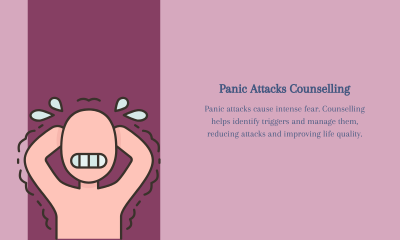
panic attacks and the fear of them returning usually affects both the mind and the body. It can change anticipation, sleep, avoidance, confidence, and the way ordinary situations are experienced before they even happen.
If parts of this already feel familiar, the sections below can help you recognise how the pattern may be showing up in daily life and where support may help.
What often comes with this kind of strain
Panic attacks and the fear of them returning often shows up through thoughts, emotions, habits, or relationship patterns before it feels easy to explain clearly.
Many people keep adapting around panic attacks and the fear of them returning, which can make the strain feel normal even when it is already affecting daily balance.
The effect of panic attacks and the fear of them returning can reach mood, routine, confidence, communication, or the ability to feel settled through the day.
Counselling can make panic attacks and the fear of them returning feel more understandable, less isolating, and easier to respond to with steadier next steps.
Daily-Life Understanding
These signs can make it easier to recognise how the issue may be affecting thoughts, feelings, behaviour, or relationships in everyday life.
With panic attacks and the fear of them returning, anticipation can begin long before the actual situation arrives.
Tension, vigilance, unease, or fast physical reactions often appear even when the person is trying to stay calm.
People often start reducing exposure to stressful situations because it brings short-term relief.
Even small triggers linked with the issue may take more time to settle emotionally or physically.
Common Patterns
These are some of the cycles, habits, and internal responses that can make the issue feel heavier over time.
Where the pattern often shows up
panic attacks and the fear of them returning often involves repeated forecasting, over-preparation, or worry about what could go wrong.
Checking, reassurance, escape planning, or staying hyper-prepared may start shaping behaviour.
Short-term avoidance may lower discomfort in the moment, but it usually does not resolve the deeper anxiety pattern.
Decisions, travel, social plans, work choices, or confidence can slowly narrow around what feels safest.
Impact Areas
Strain like this rarely stays in one place. It often reaches emotions, routines, confidence, relationships, or the way the body settles after stress.
Impact 01
The nervous system can remain activated even after the stressful moment has passed.
Impact 02
Too much mental forecasting can reduce focus, follow-through, and clarity.
Impact 03
People may start doubting their ability to cope with situations they used to handle more easily.
Impact 04
Small choices can start carrying more emotional weight because the issue is already active in the background.
When Support Is Usually Needed
These are common points where people decide that coping alone is no longer enough and a steadier kind of support may help.
Who This Support Is For
If your experience sounds similar to the points below, it may be a sign that this kind of support could be relevant for you.
Self-Check Indicators
These markers are meant to support clarity, not self-diagnosis. They can help you notice whether the issue is influencing everyday functioning in a meaningful way.
Indicator 01
With panic attacks and the fear of them returning, fear often begins before the actual trigger appears, not only when it is directly in front of you.
Indicator 02
You start choosing distance, exits, timing, or alternate plans mainly to avoid that spike of fear.
Indicator 03
The calm usually comes from getting away from the trigger rather than feeling genuinely settled around it.
Indicator 04
One difficult experience can make the next situation feel bigger, even when daily life is already being rearranged around it.
How Counselling Can Help
Support can help you make sense of what is happening, respond more steadily, and work on the patterns that are keeping the issue active.
Support helps clarify what is really feeding panic attacks and the fear of them returning rather than only reacting to the latest episode or trigger.
Counselling can link panic attacks and the fear of them returning with the parts of life it is affecting most, including relationships, confidence, routine, or emotional steadiness.
Therapy can support steadier coping, better regulation, and clearer next steps around panic attacks and the fear of them returning.
The goal is not only relief, but a clearer way of understanding, managing, and responding to panic attacks and the fear of them returning over time.
What Sessions May Focus On
These are the kinds of practical areas people often work on once support begins.
Sessions often begin by clarifying how panic attacks and the fear of them returning is currently showing up rather than assuming one fixed story about it.
Support may focus on triggers, beliefs, stress responses, and behaviour patterns connected with panic attacks and the fear of them returning.
Therapy can then shift toward emotional regulation, clearer coping, better boundaries, and a steadier way of handling panic attacks and the fear of them returning.
Sessions can track what is changing, what is still difficult, and which kinds of support are most useful going forward.
Online Counselling
Online support can make it easier to begin privately, keep momentum, and stay consistent without adding more strain to daily life.
Step 01
You do not need to explain everything perfectly at once. Begin from the part that currently feels heaviest or most disruptive.
Step 02
Online support can help connect the concern with the habits, emotions, and situations that keep it active.
Step 03
Click2Pro keeps the path simple through online sessions, psychologist profile review, and WhatsApp-based guidance when you want it.
What the next step can look like
Myths vs Reality
These clarifications can help if doubt, self-minimising, or mixed advice has made it harder to decide whether support is worth considering.
Myth
It only matters if it becomes extreme.
Reality
Even when panic attacks and the fear of them returning seems manageable on the surface, persistent strain can still affect functioning, confidence, and emotional balance.
Myth
If you understand it, it should be easy to fix alone.
Reality
Insight is important, but change often becomes easier when the deeper pattern is worked through in a more structured way.
Myth
Support is only useful when the situation becomes unmanageable.
Reality
Many people benefit before the issue reaches crisis level, especially when they want clarity, steadier coping, and a healthier next step.
Psychologists at Click2Pro
If you want to see who you may be speaking with, you can review a few psychologist profiles here before taking the next step.

Expertise

Expertise

Expertise
Speak With Click2Pro
If this is starting to affect day-to-day life, you can explore Therapy for Panic Attack through Click2Pro on WhatsApp, review psychologist profiles, or use Contact Us if you would like a calmer next step.
Full Detailed Guide
If you want the earlier long-form information on Therapy for Panic Attack, you can continue with the preserved guide below.
Living with panic attacks can feel like being caught in a storm you can’t control. The sudden surge of fear, accompanied by physical symptoms like a racing heart or shortness of breath, can disrupt your daily life, leaving you feeling vulnerable and isolated. For many, the uncertainty of when the next panic attack might occur only adds to the distress.
Understanding that help is available is the first step toward reclaiming your peace. Therapy for panic attacks offers a structured and supportive way to address the root causes of your distress. At Click2Pro, we specialize in providing personalized mental health solutions, whether you are facing mild anxiety or chronic panic attacks that interfere with your routine.
Our focus isn’t just on managing the immediate symptoms but also on empowering you with tools to regain control. With the convenience of online counselling India, you can now connect with experienced therapists from the comfort of your home. Our professionals work closely with you to create strategies that align with your needs, fostering a safe environment for recovery.
Take that crucial step today. Therapy can transform your life by helping you navigate your emotions, understand your triggers, and embrace a future free from the constraints of panic.
Panic attacks don’t just affect your body—they impact your mind and life as a whole. People suffering from panic disorder often experience an overwhelming fear of the unknown, coupled with a range of physical symptoms such as dizziness, trembling, or chest pain. These episodes may occur unexpectedly or be triggered by specific situations, making it difficult to predict or avoid.
Over time, untreated panic disorders can lead to isolation and avoidance behaviors. You may find yourself avoiding places or situations that remind you of past panic episodes. This can disrupt relationships, hinder career progress, and limit social interactions.
While these challenges may seem overwhelming, professional support can make a significant difference. With Click2Pro, our therapy for panic attacks focuses on breaking this cycle. By addressing both the physical and psychological symptoms, our therapists help you regain control over your thoughts and emotions.
Our team, including the best online psychologist in India, works with you to explore coping mechanisms tailored to your needs. Whether it’s through Cognitive Behavioral Therapy (CBT), relaxation techniques, or identifying triggers, we aim to help you reclaim your life.
Recognizing the signs of a panic disorder and seeking therapy early can prevent it from escalating. Don’t wait—taking action today can pave the way for a brighter, calmer tomorrow.
Managing panic attacks on your own can feel daunting, but incorporating simple strategies into your routine can provide immediate relief during stressful moments. While therapy for panic attacks is essential for long-term recovery, these self-help techniques can serve as practical tools to regain control.
Breathing Exercises: When a panic attack strikes, focusing on slow, deep breathing can help calm your racing heart and reduce feelings of fear. Techniques like diaphragmatic breathing (inhale deeply through your nose, hold for a few seconds, and exhale slowly) are effective in regaining composure.
Grounding Techniques: Use your senses to connect with the present moment. For instance, identify five things you see, four things you can touch, three things you hear, two you can smell, and one you can taste. This technique can distract your mind and reduce panic.
Journaling: Writing down your thoughts after an episode can help identify triggers and patterns. Over time, this practice may offer insights into what exacerbates or alleviates your symptoms.
Physical Activity: Exercise releases endorphins, which act as natural stress relievers. A brisk walk or yoga session can help reduce the intensity of a panic attack.
While these strategies are beneficial, they cannot replace professional help. Incorporating these methods alongside therapy for panic attacks ensures a more comprehensive approach to recovery. At Click2Pro, our therapists can teach you how to enhance these techniques and use them effectively for coping with panic attacks.
Panic attacks can disrupt your life in profound ways, but you don’t have to face them alone. Seeking therapy for panic attacks offers an evidence-based solution for regaining control and improving your quality of life.
Unlike self-help techniques, professional therapy addresses the root causes of your anxiety, helping you understand why panic attacks occur and how to prevent them. A trained panic disorder therapist near me provides tailored strategies that are unique to your experiences, ensuring long-lasting results.
Therapists at Click2Pro specialize in treating panic disorders through methods like Cognitive Behavioral Therapy (CBT), which is proven to help individuals identify and challenge unhelpful thought patterns. Our professionals also guide you through relaxation techniques and exposure therapy, gradually reducing the fear associated with triggering situations.
Investing in therapy for panic attacks not only reduces the frequency and intensity of episodes but also empowers you with lifelong skills to manage stress and anxiety. Early intervention can prevent the condition from worsening, allowing you to focus on living a fulfilling, panic-free life.
At Click2Pro, we understand that every individual’s journey with panic attacks is unique. Our therapy for panic attacks is tailored to your specific needs, ensuring that you receive personalized care that addresses both immediate symptoms and long-term triggers.
Our expert therapists use evidence-based techniques such as Cognitive Behavioral Therapy (CBT) to help you identify and challenge unhelpful thought patterns. Through this structured approach, you’ll learn to recognize the signs of a panic attack early and apply effective strategies to manage it.
We also incorporate mindfulness and relaxation exercises, which are proven to reduce anxiety and promote emotional balance. By integrating these practices into your routine, we aim to empower you to regain control over your emotions and daily life.
What sets us apart is our dedication to accessibility and convenience. Whether you prefer in-person sessions or the flexibility of online therapy, our team is here to support you every step of the way. With Click2Pro’s therapy for panic attacks, you’re not just managing your condition—you’re overcoming it.
Take the first step toward a calmer, more confident you by reaching out to us today. Together, we can help you build a life free from the limitations of panic.
At Click2Pro, we’ve had the privilege of helping countless individuals regain control of their lives through therapy for panic attacks. Each success story is a testament to the transformative power of therapy and the resilience of our clients.
One client shared how their panic attacks had made it impossible to attend work meetings. Through a combination of CBT and mindfulness practices, they learned effective strategies for coping with panic attacks, and within a few months, they were confidently leading presentations.
Another client, who struggled with social gatherings due to frequent panic episodes, found relief through our personalized treatment plan. By addressing their triggers and equipping them with grounding techniques, they were able to reconnect with friends and family, enjoying a vibrant social life once again.
These stories are just a glimpse of what’s possible with the right guidance. Our therapy for panic attacks isn’t just about symptom management—it’s about empowering you to lead a fulfilling, panic-free life.
Let these successes inspire you to take the first step toward your own recovery journey. With Click2Pro, a brighter future is within reach.
1. How does therapy help with panic attacks?
Therapy provides tools to manage and reduce the frequency of panic attacks. Techniques like Cognitive Behavioral Therapy (CBT) identify triggers, change negative thought patterns, and equip you with coping mechanisms for a more peaceful life. Click2Pro specializes in personalized therapy for panic attacks, focusing on both short-term relief and long-term recovery.
2. What is the difference between anxiety and panic disorder?
While anxiety often involves persistent worry, panic disorder includes sudden, intense episodes of fear accompanied by physical symptoms like sweating, shaking, or a racing heart. Our therapists help differentiate these conditions and design targeted treatment plans.
3. How soon can I expect results from therapy?
Progress depends on individual circumstances. Some clients notice improvements within weeks of starting therapy for panic attacks, while others may take longer. Your therapist will create a plan tailored to your pace and goals, ensuring lasting results.
Click2Pro Homepage
If you want to step back from Therapy for Panic Attack and look at support more broadly, the homepage can help you compare options without narrowing too quickly.
Related discovery
These options stay close to what you may be dealing with, so it is easier to keep going without losing the thread.
Related Services
Support areas that stay close to this concern if you want to compare what may fit best.
Related Cities
Major cities where this kind of support is available if location matters to your next step.
Related Blogs
Guides and articles that stay close to the current theme.
Related Psychologists
Psychologists you may want to compare if you are looking for someone who feels like a good fit.
FAQ
These answers cover some of the questions people often have when they are trying to understand the issue and decide whether support may help.

Prioritizing mental health is crucial for a balanced and fulfilling life. At Click2Pro, we understand that mental well-being affects every aspect of your life. By investing in mental health, you enhance your happiness and resilience, better equipping yourself to face life's challenges. Our top psychologists and therapists provide personalized, confidential care tailored to your unique needs. Embrace better mental health with Click2Pro and experience the transformative power of compassionate, expert support. You deserve to thrive.





Talk to Therapist